


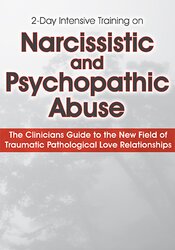
2-Day Intensive Training on Narcissistic and Psychopathic Abuse: The Clinicians Guide to the New Field of Traumatic Pathological Love Relationships
- Speakers:
- Sandra L. Brown, MA | Claudia Paradise, LCSW-R | William P. Brennan, MEd, LMHC, CAP
- Duration:
- 12 Hours 20 Minutes
- Language:
- Presented in EN, subtitles in EN and FR, handouts in EN and FR
- Format:
- Audio and Video
- Copyright:
-
Aug 12, 2021
- Product Code:
- POS058210
- Media Type:
- Digital Seminar

Description
You may have trauma clients who are victims of narcissistic abuse without even knowing it.
In a clinical setting, victims of narcissistic abuse can be conditioned to behave a certain way, to show only the good things. They can dissociate to remove themselves from the trauma, and struggle to talk about the abuse in therapy. Some may not even be aware of the abuse, especially if the narcissist is still involved.
If you’re like most clinicians, you only have a superficial understanding of personality disorders and the traumatic harm those with them can inflict on their partners. Without the proper training you can fail to connect the dots and miss a key component of treatment for these clients.
This program will give you the in-depth understanding and clinical tools you need to recognize the signs of abuse from Cluster B disordered partners and discover the keys to treating the survivors!
Sandra Brown, M.A., is a pioneer in the field of narcissistic and psychopathic abuse and the current president of The Association for NPD/Psychopathy Survivor Treatment, Research & Education who has worked with and researched narcissistic abuse survivors for over 30 years.
Watch her, along with experts Claudia Paradise, LCSW-R and Bill Brennan, M.Ed., LMHC, CAP, for this live two-day webinar as they show you how you can:
- Identify pathological love relationships
- Differentiate PLRs from other stereotypical domestic violence, addictive, co-dependent, or dysfunctional relationships
- Recognize the unique relational dynamics generated from the pathology and the traumatic impact to intimate partners
- Understand why certain survivor personalities seem to be targeted
- Key considerations for treating the traumatic aftermath
Don’t miss this chance to add a new dimension to your trauma treatment toolbox and help survivors of narcissistic abuse find the path to recovery. Purchase today!
Credit
Program Information
Disclosure of Program CoSponsorshipThis program was developed through the joint providership of PESI, Inc. and The Association for NPD/Psychopathy Survivor Treatment, Research & Education.
Planning Committee Disclosure - No relevant relationships
All members of the PESI, Inc. planning committee have provided disclosures of financial relationships with ineligible organizations and any relevant non-financial relationships prior to planning content for this activity. None of the committee members had relevant financial relationships with ineligible companies or other potentially biasing relationships to disclose to learners. For speaker disclosures, please see the faculty biography.
NOTE: Tuition includes one free CE Certificate (participant will be able to print the certificate of completion after passing the online post-test (80% passing score) and completing the evaluation). Instructional methods will include PowerPoint, didactic lecture, and others.
Continuing Education Information: Listed below are the continuing education credit(s) currently available for this non-interactive self-study package. Program content is reviewed periodically per accrediting board rules for currency and appropriateness for credit. Credit approvals are subject to change. Please note, your licensing board dictates whether self-study is an acceptable form of continuing education, as well as which credit types are acceptable for continuing education hours. Please refer to your licensing board's rules and regulations. If your profession is not listed, please contact your licensing board to determine your continuing education requirements and check for reciprocal approval.
For other credit inquiries not specified below, please contact info@pesi.com or 800-844-8260 before purchase.
Materials that are included in this course may include interventions and modalities that are beyond the authorized practice of your profession. As a licensed professional, you are responsible for reviewing the scope of practice, including activities that are defined in law as beyond the boundaries of practice in accordance with and in compliance with your profession's standards.
For Planning Committee disclosures, please see the statement above. For speaker disclosures, please see the faculty biography.
Earn up to 12.25 CE hours. Please see below, for more details, as credit amounts vary by jurisdiction and profession.
PESI, Inc. is approved by the Canadian Counselling and Psychotherapy Association to offer continuing education for counsellors and psychotherapists. PESI, Inc. maintains responsibility for the program. This self-study activity is approved for 12.0 credit hours.
This self-study activity qualifies for 12.25 continuing education clock hours as required by many national and local licensing boards and professional organizations. Save your activity advertisement and certificate of completion, and contact your own board or organization for specific requirements.

This self-study course has been approved by PESI, Inc., as a NAADAC Approved Education Provider, for educational credits. NAADAC Provider #77553. PESI, Inc. is responsible for all aspects of their programming.
This self-study course offers 12.0 continuing education contact hours in the Counseling Services skill group. Full attendance is required; no partial credit will be awarded for partial attendance.
Handouts
| File type | File name | Number of pages | |
|---|---|---|---|
| Manual - 2-Day Intensive Training on Narcissistic and Psychopathic Abuse (25.4 MB) | 391 Pages | Available after Purchase | |
| Manual - 2-Day Intensive Training on Narcissistic and Psychopathic Abuse - French (25.4 MB) | 391 Pages | Available after Purchase | |
| Manual - 2-Day Intensive Training on Narcissistic and Psychopathic Abuse - Italian (25.4 MB) | 391 Pages | Available after Purchase | |
| Manual for Parts 1-2 - 2-Day Intensive Training on Narcissistic and Psychopathic Abuse - German (25.36 MB) | 391 Pages | Available after Purchase | |
| Manual for Parts 1-2 - 2-Day Intensive Training on Narcissistic and Psychopathic Abuse - Spanish (25.36 MB) | 391 Pages | Available after Purchase |
Speaker
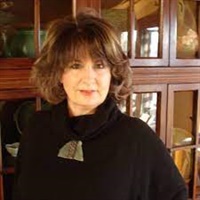
Sandra L. Brown, MA Related seminars and products
Sandra L. Brown, MA, has worked with narcissistic abuse survivors for over 30 years and is often referred to as the pioneer in the field of pathological love relationships (relationships with partners who have narcissism or psychopathy). Her seminal work and research helped launch the ‘Narcissistic and Psychopathic Abuse’ field. She is an author of hundreds of articles for survivors on narcissistic abuse and her books include the highly popular How to Spot a Dangerous Man Before You Get Involved (Hunter House, 2005), the award-winning Women Who Love Psychopaths: Inside the Relationships of Inevitable Harm With Psychopaths, Sociopaths & Narcissists (Mask Publishing, 2018), as well as the clinically-relevant Counseling Victims of Violence (American Counseling Association, 1991). She is the current president of The Association for NPD/Psychopathy Survivor Treatment, Research & Education, and the CEO of The Institute for Relational Harm Reduction and Public Pathology Education.
Speaker Disclosures:
Financial: Sandra Brown has employment relationships with the Institute for Relational Harm Reduction & Public Pathology Education and the Assn for NPD/Psychopathy Survivor Treatment, Research & Education. She receives royalties as a published author. Sandra Brown receives a speaking honorarium and recording royalties from PESI, Inc. She has no relevant financial relationships with ineligible organizations
Non-financial: Sandra Brown has no relevant non-financial relationships.

Additional Info
Program Information
Access for Self-Study (Non-Interactive)Access never expires for this product.
For a more detailed outline that includes times or durations of time, if needed, please contact cepesi@pesi.com.
Questions?
Visit our FAQ page at https://www.pesicanada.com/faq or contact us at https://www.pesicanada.com/contact-us
Objectives
- Differentiate narcissistic abuse from other domestic violence, addictive, co-dependent, or dysfunctional relationships to inform clinical treatment.
- Analyze the unique relational dynamics generated from the pathology and the impact to intimate partners.
- Investigate common mistakes made by practitioners in the identification and treatment of survivors of narcissistic and psychopathic abuse.
- Investigate the five stages of a Pathological Love Relationship (narcissistic abuse).
- Analyze Cluster B personality disorders for a better understanding of how Cluster B partners can exploit the vulnerabilities of those in close relationships.
- Apply the DSM-5 Alternative Model personality disorder “four impairments” to predict relational deficits in narcissistic abuse.
- Investigate co-morbid and intensification factors related to behavior of the narcissistic abuser.
- Assess the role of chronic and pervasive Cognitive Dissonance in survivor symptomology.
- Analyze how gaslighting, coercive control, and subterfuge in the context of romantic relationships, can lead to negative impacts on cognition.
- Employ in-session approaches to help clients recognize narcissistic behavior in their partners and become aware of the consequences.
- Employ psychoeducation techniques to teach survivors about personality disorders and the manipulative tactics, coercive devices and subtle signs that they may be victim of narcissistic abuse.
- Utilize clinical techniques to unravel problematic beliefs that can prevent victims of narcissistic abuse from making therapeutic progress.
Outline
Pathological Love Relationships (PLR) Defined- What therapists are doing wrong
- What survivors said they needed and weren’t getting
- PLR Description
- Theoretical influences
- Differentiating these relationships from other fields and disciplines
- Research and research limitations
- Identifying Pathological Love Relationships through personality and personality pathology
- Personality disorders and the importance of the issue of ‘pervasiveness’
- Symptomatic conditions -vs- characteristic conditions
- How to read life patterns of the normal and the disordered
- Cluster B disorders and the danger zone personalities and spectrum
- The DSM-5™ Alternative Model and relational pathology
- The Categorical Model vs The Dimensional Alternative Model
- The four core impairments in personality disorders
- Definitions, descriptions and behaviors
- Symptom traits vs maladaptive traits
- What if I can’t diagnose the other party?
- Partner-related assessments and usefulness
- Developing clinical impressions, reasonable assumptions, and working hypothesis in detection
- Personality theories that create bias
- The neuroscience and neurobiology of personality disorders
- DSM symptoms reflected in the neuro impairments
- How clients benefit from neurobiology education
- Pre-Stage— trolling, luring and predatory targeting tactics
- Early Stage— manufactured intensity, love bombing, mirroring, reflective relational tactics
- Mid-Stage —coercive control, gaslighting and subterfuge
- End relationship dynamics
- Case studies for each stage
- Who these survivors are NOT
- Survivor personality super trait elevations and its importance in targeting and recovery
- Agreeableness and cooperation: the relationship investment trait
- Conscientiousness and self-directedness: the integrity-oriented life traits
- Misidentification/misdiagnosis of personality ‘Super Traits’
- Codependency, dependent PD, borderline PD, empaths
- How these survivor’s symptoms can be different
- Atypical trauma and misdiagnosis
- Cognitive dissonance and its presentation in survivors
- Difference in chronic and persistent CD—not your college understanding
- Cognitive dissonance and its connection to PTSD intensification
- Case discussion on symptomology including Executive Functioning and CD
- Trauma treatment and why EMDR is helpful
- Treatment limitations and contraindications
- Pathology
- Relational dynamics
- Super trait personality
- Atypical trauma present
Target Audience
- Counselors
- Social Workers
- Marriage & Family Therapists
- Addiction Counselors
- Psychiatric Nurses
- Psychologists
Reviews
Satisfaction Guarantee
Your satisfaction is our goal and our guarantee. Concerns should be addressed to info@pesicanada.com.
Please wait ...