


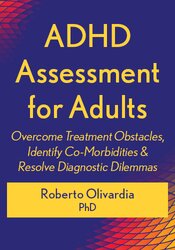
ADHD Assessment for Adults: Overcome Treatment Obstacles, Identify Co-Morbidities & Resolve Diagnostic Dilemmas
- Speaker:
- Roberto Olivardia, PhD
- Duration:
- 4 Hours 28 Minutes
- Language:
- Presented in EN, subtitles in EN and FR, handouts in EN and FR
- Copyright:
-
Jun 03, 2022
- Product Code:
- POS059002
- Media Type:
- Digital Seminar

Description
When ADHD is misdiagnosed or undiagnosed it presents tremendous life challenges for your clients…
Struggles at work, parenting and relationships can destroy your client’s self-esteem leaving them feeling hopeless.
Get the education to give your clients a path toward thriving in life.
Join Harvard-trained Dr. Roberto Olivardia to go beyond DSM-5® diagnostic criteria and dive into expert assessment. You’ll learn:
- The right questions to make assessment quicker & easier!
- ADHD screening & assessments – plus, their limitations
- How the ADHD brain works in a language your client can understand
- Best practices for identifying learning disabilities, autism spectrum disorder, anxiety, mood disorders, eating disorders & MORE!
Advance your ADHD diagnosis, assessment & screening expertise!
Credit
Program Information
Planning Committee Disclosure - No relevant relationshipsAll members of the PESI, Inc. planning committee have provided disclosures of financial relationships with ineligible organizations and any relevant non-financial relationships prior to planning content for this activity. None of the committee members had relevant financial relationships with ineligible companies or other potentially biasing relationships to disclose to learners. For speaker disclosures, please see the faculty biography.
NOTE: Tuition includes one free CE Certificate (participant will be able to print the certificate of completion after passing the online post-test (80% passing score) and completing the evaluation). Instructional methods will include PowerPoint, didactic lecture, and others.
Continuing Education Information: Listed below are the continuing education credit(s) currently available for this non-interactive self-study package. Program content is reviewed periodically per accrediting board rules for currency and appropriateness for credit. Credit approvals are subject to change. Please note, your licensing board dictates whether self-study is an acceptable form of continuing education, as well as which credit types are acceptable for continuing education hours. Please refer to your licensing board's rules and regulations. If your profession is not listed, please contact your licensing board to determine your continuing education requirements and check for reciprocal approval.
For other credit inquiries not specified below, please contact info@pesi.com or 800-844-8260 before purchase.
Materials that are included in this course may include interventions and modalities that are beyond the authorized practice of your profession. As a licensed professional, you are responsible for reviewing the scope of practice, including activities that are defined in law as beyond the boundaries of practice in accordance with and in compliance with your profession's standards.
For Planning Committee disclosures, please see the statement above. For speaker disclosures, please see the faculty biography.
Earn up to 4.25 CE hours. Please see below, for more details, as credit amounts vary by jurisdiction and profession.
PESI, Inc. is approved by the Canadian Counselling and Psychotherapy Association to offer continuing education for counsellors and psychotherapists. PESI, Inc. maintains responsibility for the program. This self-study activity is approved for 4.0 credit hours.
PESI, Inc. is approved by the Canadian Psychological Association to offer continuing education for psychologists. PESI, Inc. maintains responsibility for the program. This program is approved for 4.0 self-study continuing education hours. Full credit statement at: www.pesi.com/cpa-statement

PESI, Inc., #1062, is approved as an ACE provider to offer social work continuing education by the Association of Social Work Boards (ASWB) Approved Continuing Education (ACE) program. Regulatory boards are the final authority on courses accepted for continuing education credit. ACE provider approval period: January 27, 2026 - January 27, 2029. Social workers completing this course receive 4.25 Clinical continuing education credits.
Course Level: Intermediate Format: Recorded asynchronous distance. Full attendance is required; no partial credits will be offered for partial attendance.
Canadian Social Workers: Canadian provinces may accept activities offered by providers approved by the ASWB ACE program for ongoing professional development.
This self-study activity qualifies for 4.25 continuing education clock hours as required by many national and local licensing boards and professional organizations. Save your activity advertisement and certificate of completion, and contact your own board or organization for specific requirements.
Handouts
| File type | File name | Number of pages | |
|---|---|---|---|
| Manual - ADHD Assessment for Adults (1.5 MB) | 89 Pages | Available after Purchase | |
| Manual - ADHD Assessment for Adults (Black & White version) (2 MB) | 89 Pages | Available after Purchase | |
| Manual - ADHD Assessment for Adults - French (1.5 MB) | 89 Pages | Available after Purchase | |
| Manual - ADHD Assessment for Adults (Black & White version) - French (2 MB) | 89 Pages | Available after Purchase | |
| Manual - ADHD Assessment for Adults - Italian (1.5 MB) | 89 Pages | Available after Purchase | |
| Manual - ADHD Assessment for Adults (Black & White version) - Italian (2 MB) | 89 Pages | Available after Purchase | |
| Manual - ADHD Assessment for Adults - German (1.5 MB) | 89 Pages | Available after Purchase | |
| Manual - ADHD Assessment for Adults (Black & White version) - German (2 MB) | 89 Pages | Available after Purchase | |
| Manual - ADHD Assessment for Adults - Spanish (1.5 MB) | 89 Pages | Available after Purchase | |
| Manual - ADHD Assessment for Adults (Black & White version) - Spanish (2 MB) | 89 Pages | Available after Purchase |
Speaker
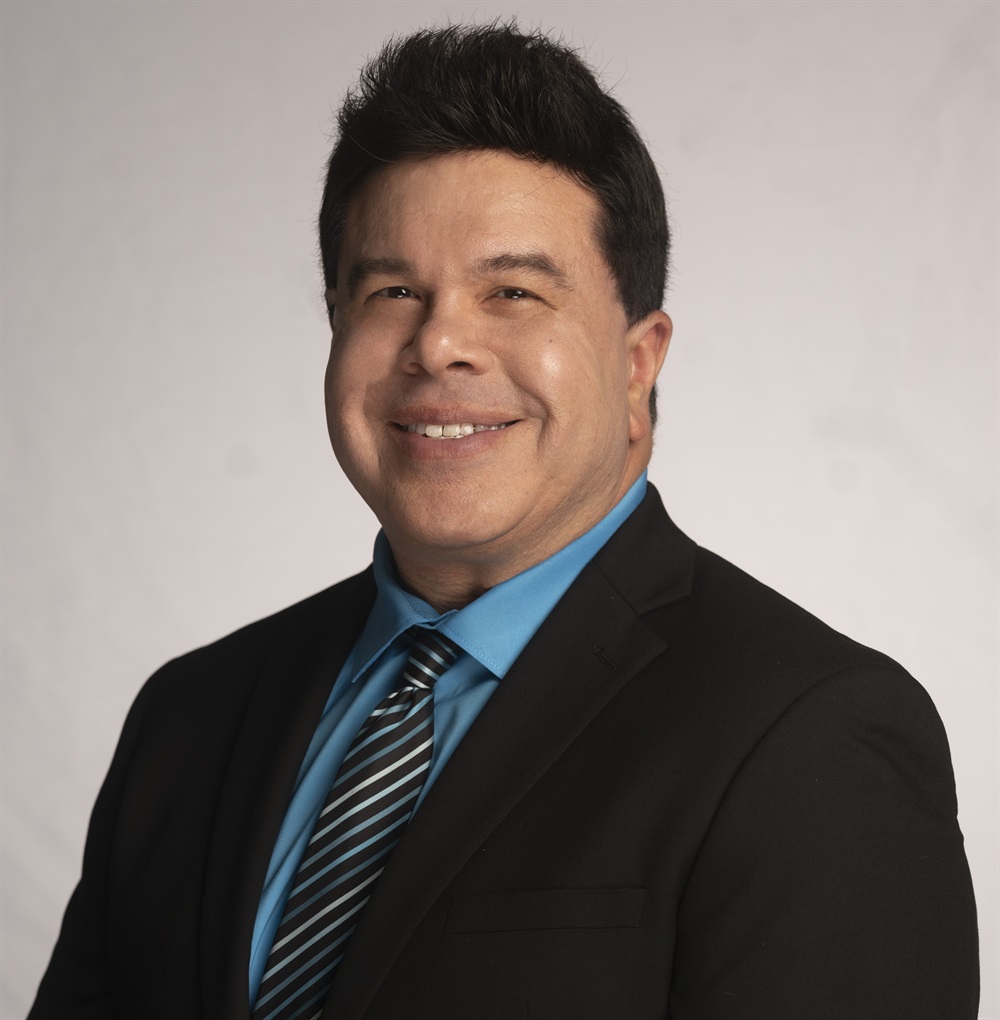
Roberto Olivardia, PhD Related seminars and products
Dr. Roberto Olivardia is a clinical psychologist, lecturer in the department of psychiatry at Harvard Medical School and clinical associate at McLean Hospital. He maintains a private practice in Lexington, MA, where he specializes in the treatment of ADHD, executive functioning issues, and issues that face students with learning differences. He is a recognized expert in the treatment of body dysmorphic disorder (BDD), eating disorders and obsessive-compulsive disorder (OCD). He is on the Professional Advisory Boards for Children and Adults with ADHD (CHADD) and The Attention Deficit Disorder Association (ADDA), as well as sits on the Scientific Advisory Board for ADDitude and the Expert Network for Understood. He is co-author of The Adonis Complex, a book which details the various manifestations of body image problems in males. He has appeared in publications such as Time, GQ, and Rolling Stone, and has been featured on Good Morning America, Extra, CBS This Morning, CNN, and VH1. He has spoken on numerous radio and webinar shows and presents at many talks and conferences around the country. He conducts advocacy work for Decoding Dyslexia – Massachusetts and is a member of the American Association of Suicidology and International Dyslexia – Massachusetts and is a member of the American Association of Suicidology and International Dyslexia Association. He also has lived experience as someone with ADHD and learning differences and a parent of two teenagers with ADHD and Dyslexia.
Speaker Disclosures:
Financial: Dr. Roberto Olivardia maintains a private practice and has employment relationships with McLean Hospital, Within Health, and Women Insight, Inc. He receives royalties as a published author and is a consultant with the National Institute of Drug Abuse, Risk Factors for Anabolic-Androgenic Steroid Abuse. Dr. Olivardia receives a speaking honorarium and recording royalties from PESI, Inc. He has no relevant financial relationships with ineligible organizations.
Non-financial: Dr. Roberto Olivardia is a member of the Academy for Eating Disorders, the American Association of Suicidology, the American Psychological Association, the Attention Deficit Disorder Association, the Children and Adults with Attention Deficit Hyperactivity Disorder, the International Dyslexia Association, the International Obsessive-Compulsive Foundation, the Massachusetts Psychological Association, and the Multi-Service Eating Disorder Association.
Additional Info
Program Information
Access for Self-Study (Non-Interactive)Access never expires for this product.
For a more detailed outline that includes times or durations of time, if needed, please contact cepesi@pesi.com
Questions?
Visit our FAQ page at https://www.pesicanada.com/faq or contact us at https://www.pesicanada.com/contact-us
Objectives
- Theorize how aspects of the ADHD brain help explain its symptoms.
- Investigate components of a thorough clinical assessment for ADHD.
- Diagnose symptoms and features of various co-morbid disorders and conditions (i.e. learning disabilities, autism spectrum disorder, anxiety disorders, mood disorders, substance abuse and addictive disorders, and eating disorders).
- Determine differential factors between ADHD and the comorbid disorders and conditions.
Outline
Diagnosing ADHD Properly- Review of the DSM-5® Criteria
- Problems and Limitations of the DSM-5® criteria
- Common ADHD surveys
- Problems and Limitations with ADHD surveys
- Neuropsychological testing Measures and Indices for ADHD
- Problems and Limitations with neuropsychological testing
- Understanding the ADHD Brain
- Going beyond the criteria
- Ask more detail about symptoms that people endorse or deny (questions to ask)
- Understanding the importance of context
- Screening for psychiatric disorders and possible comorbid disorders for differential diagnosis
*Each section reviews traits/symptoms of the co-morbid disorder, how having ADHD can be a risk factor and/or is commonly associated, how to differentiate it from ADHD, as well as treatment/interventions when people have both ADHD and the comorbid disorder
- Learning disabilities
- Dyslexia
- Dyscalculia
- Dysgraphia
- Non-Verbal Learning Disability (NVLD)
- Autism Spectrum Disorder
- Anxiety Disorders
- Generalized Anxiety Disorder (GAD)
- Obsessive-Compulsive Disorder (OCD)
- Social Anxiety Disorder
- Anxiety secondary to ADHD and executive function issues
- Mood Disorders
- Depression
- Dysthymia
- Bipolar Disorder and Bipolar Spectrum Disorders
- Suicide
- Substance Abuse and other Addictions
- Cannabis
- Alcohol
- Other Addictive Behaviors
- Eating Disorders and Body Image Problems
- Binge Eating Disorder
- Bulimia Nervosa
- Anorexia Nervosa
- Body Dysmorphic Disorder
- Men and Eating Disorders
Target Audience
- Counselors
- Social Workers
- Psychologists
- Marriage and Family Therapists
- Speech-Language Pathologists
- Teachers
- School Administrators
- Addiction Counselors
- Occupational Therapists
- Occupational Therapy Assistants
- Nurses
- Physicians
- Other Helping Professionals
Reviews
Satisfaction Guarantee
Your satisfaction is our goal and our guarantee. Concerns should be addressed to info@pesicanada.com.
Please wait ...