


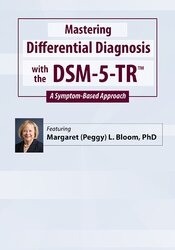
Mastering Differential Diagnosis with the DSM-5-TR™
A Symptom-Based Approach
- Speaker:
- Margaret Bloom, PhD
- Duration:
- 6 Hours 23 Minutes
- Language:
- Presented in EN, subtitles in EN and FR, handouts in EN and FR
- Copyright:
-
Dec 08, 2025
- Product Code:
- POS058863
- Media Type:
- Digital Seminar

Description
A recent study found that more than a third of all diagnoses assigned to individuals with severe mental disorders include errors, and over half of clients with major depressive disorders are incorrectly diagnosed. Such errors in diagnosis can greatly harm clients by preventing them from receiving proper treatment. Fortunately, most of these errors are easily preventable in the first place, and that’s where the DSM-5-TR and this webinar can help!
Using a differential diagnosis process with every client and applying the updated diagnostic criteria sets and specifiers for mental disorders in the DSM-5-TR, the latest version of the DSM manual, will improve the professionals’ accuracy in diagnosis and help prevent missed diagnoses.
This advanced seminar is designed specifically for mental health professionals seeking to master clinical differential diagnosis using the DSM-5-TR, the ICD-10, and online assessment tools. Case examples and studies are provided throughout - giving you the opportunity to learn and practice a symptoms-based, four-step diagnostic method. In this workshop, you will also learn:
- Key symptoms for each diagnosis
- Common differential diagnoses
- DSM-5-TR additions to the DSM-5
- Frequent comorbid disorders of anxiety, depressive, trauma-related, substance-related, psychotic, and neurodevelopmental disorders
- How to conduct an effective diagnostic intake interview
- Online assessment tools to narrow diagnosis and potential comorbidities
Get caught up with the latest diagnoses and codes in the new DSM-5-TR!
Don’t forget to have your DSM-5-TR manual handy!
Credit
Program Information
Planning Committee Disclosure - No relevant relationshipsAll members of the PESI, Inc. planning committee have provided disclosures of financial relationships with ineligible organizations and any relevant non-financial relationships prior to planning content for this activity. None of the committee members had relevant financial relationships with ineligible companies or other potentially biasing relationships to disclose to learners. For speaker disclosures, please see the faculty biography.
NOTE: Tuition includes one free CE Certificate (participant will be able to print the certificate of completion after passing the online post-test (80% passing score) and completing the evaluation). Instructional methods will include PowerPoint, didactic lecture, and others.
Continuing Education Information: Listed below are the continuing education credit(s) currently available for this non-interactive self-study package. Program content is reviewed periodically per accrediting board rules for currency and appropriateness for credit. Credit approvals are subject to change. Please note, your licensing board dictates whether self-study is an acceptable form of continuing education, as well as which credit types are acceptable for continuing education hours. Please refer to your licensing board's rules and regulations. If your profession is not listed, please contact your licensing board to determine your continuing education requirements and check for reciprocal approval.
For other credit inquiries not specified below, please contact info@pesi.com or 800-844-8260 before purchase.
Materials that are included in this course may include interventions and modalities that are beyond the authorized practice of your profession. As a licensed professional, you are responsible for reviewing the scope of practice, including activities that are defined in law as beyond the boundaries of practice in accordance with and in compliance with your profession's standards.
For Planning Committee disclosures, please see the statement above. For speaker disclosures, please see the faculty biography.
Earn up to 6.25 CE hours. Please see below, for more details, as credit amounts vary by jurisdiction and profession.
PESI, Inc. is approved by the Canadian Counselling and Psychotherapy Association to offer continuing education for counsellors and psychotherapists. PESI, Inc. maintains responsibility for the program. This self-study activity is approved for 6.0 credit hours.

PESI, Inc., #1062, is approved as an ACE provider to offer social work continuing education by the Association of Social Work Boards (ASWB) Approved Continuing Education (ACE) program. Regulatory boards are the final authority on courses accepted for continuing education credit. ACE provider approval period: January 27, 2026 - January 27, 2029. Social workers completing this course receive 6.25 Clinical continuing education credits.
Course Level: Intermediate Format: Recorded asynchronous distance. Full attendance is required; no partial credits will be offered for partial attendance.
Canadian Social Workers: Canadian provinces may accept activities offered by providers approved by the ASWB ACE program for ongoing professional development.
This self-study activity qualifies for 6.25 continuing education clock hours as required by many national and local licensing boards and professional organizations. Save your activity advertisement and certificate of completion, and contact your own board or organization for specific requirements.

This self-study course has been approved by PESI, Inc., as a NAADAC Approved Education Provider, for educational credits. NAADAC Provider #77553. PESI, Inc. is responsible for all aspects of their programming.
This self-study course offers 6.0 continuing education contact hours in the Counseling Services skill group. Full attendance is required; no partial credit will be awarded for partial attendance.

PESI, Inc. is accredited as a provider of nursing continuing professional development by the American Nurses Credentialing Center’s Commission on Accreditation. Nurses completing these self-study materials will earn 6.25 contact hours. Expires: 06/11/2028.
Handouts
| File type | File name | Number of pages | |
|---|---|---|---|
| Manual - Mastering Differential Diagnosis with the DSM-5-TR™ (6 MB) | 69 Pages | Available after Purchase | |
| Manual - Mastering Differential Diagnosis with the DSM-5-TR™ - French (6 MB) | 69 Pages | Available after Purchase | |
| Manual - Mastering Differential Diagnosis with the DSM-5-TR™ - Italian (6 MB) | 69 Pages | Available after Purchase | |
| Manual - Mastering Differential Diagnosis with the DSM-5-TR™ - German (6 MB) | 69 Pages | Available after Purchase | |
| Manual - Mastering Differential Diagnosis with the DSM-5-TR™ - Spanish (6 MB) | 69 Pages | Available after Purchase |
Speaker
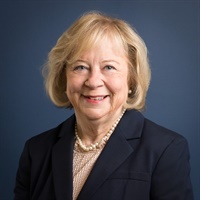
Margaret Bloom, PhD Related seminars and products
Margaret (Peggy) L. Bloom, PhD, Professor Emerita, Counselor Education and Counseling Psychology, Marquette University, Milwaukee, Wisconsin is a licensed psychologist and NCC certified counselor. Dr. Bloom is nationally recognized for her knowledge and expertise in assessment, DSM diagnosis, and counselor education. She is past chair and member of the board of directors of the Center for Credentialing & Education (NBCC), an elected fellow of the American Psychological Association (APA) and past president of the Association for Counselor Education and Supervision (ACES). Beginning her career as a psychiatric nurse and earning graduate degrees in nursing, counseling and a PhD in counseling psychology, Peggy brings a unique interdisciplinary perspective to each seminar. She has published numerous journal articles and presented professional education seminars across the world on assessment, diagnosis and counselor education.
Speaker Disclosures:
Financial: Dr. Margaret Bloom has an employment relationship with Marquette University. She receives a speaking honorarium and recording royalties from PESI, Inc. She has no relevant financial relationships with ineligible organizations.
Non-financial: Dr. Margaret Bloom serves as a guest reviewer for The Clinical Supervisor and as a chair in the peer evaluations corps, Higher Learning Commission. She is a member of the American Counseling Association, the American Psychological Association, and the Association for Counselor Education and Supervision.
Additional Info
Program Information
Access for Self-Study (Non-Interactive)Access never expires for this product.
For a more detailed outline that includes times or durations of time, if needed, please contact cepesi@pesi.com.
Questions?
Visit our FAQ page at https://www.pesicanada.ca/faq or contact us at https://www.pesicanada.ca/contact-us.
Objectives
- Describe the new additions and revisions in the DSM-5-TR impacting diagnosis of mental disorders.
- Conduct a four-step diagnostic process to accurately identify and code a client’s diagnosis.
- Investigate common differential DSM-5-TR diagnoses for clients with anxiety, depressive, or abnormal cognitive symptoms.
- Differentiate between overlapping symptoms and comorbid conditions in order to provide the correct diagnosis.
- Analyze differential diagnoses for clients who present with disruptive behavior.
- Collect the specific information required for an accurate differential DSM-5-TR diagnosis of clients with a history of trauma.
- Utilize the DSM-5-TR severity tables, assessment tools, and coding notes to improve the accuracy of diagnosis and ICD-10 coding.
Outline
DSM-5-TR Changes and Additions- Why a revision to the DSM-5?
- Significant advances in understanding specific disorders
- Knowledge of the impact of racism on diagnosis and presenting symptoms
- Alignment with the ICD-11 disorder names and codes
- Key diagnostic changes
- Prolonged Grief Disorder, Suicidal Behavior, Nonsuicidal Self-Injury
- Changed diagnostic criteria-sets for over 70 mental disorders
- New names for disorders and symptoms
- New mental disorder subtypes and specifiers
- Revised text for all most all disorders and increased emphasis on the impact of racism and discrimination in diagnosis
- Revised ICD-10-CM codes
- Using the DSM-5-TR Manual for diagnosis and ICD-10 coding and recording
- Web-based DSM-5 resources
- Effective intake interview strategies
- Identify Cognitive, Affective, and Behavioral DSM-5-TR symptom clusters
- Compile an accurate and comprehensive differential diagnosis list
- Determining the initial DSM-5-TR diagnosis list
- Identifying Comorbid Disorders
- Mental Disorders with symptoms of Depression, Anxiety, and Psychosis
- Differentiating Depressive Disorders
- Normal Grief versus DSM-5-TR Prolonged Grief Disorder
- Differentiating Anxiety Disorders
- Psychosis, patterns of cognitive symptoms, and cognitive deficits
- Mental Disorders on the Schizophrenia Spectrum versus Bipolar Disorders
- Substances and Medical Conditions associated with psychological symptoms
- Effectively differentiate overlapping disorders and identify comorbid conditions
- Clients with symptoms associated with experiences of Trauma control
- DSM-5-TR Trauma and Stressor-Related Mental Disorders
- Differential Diagnosis of Mental Disorders Developing after Stressors
- Clients with Impulsive Behaviors or Poor Impulse Control
- Normal development of self-regulation and its implications in children and adults with impulse control problems
- Substance-Related and Medical Conditions that Impact Impulse Regulation
- DSM-5-TR Disorders with Dominant Disruptive and Impulse Control symptoms
- Case 1: Client with multiple problems
- Case 2: A sad, overwhelmed client
- Case 3: Fearful and worried client
- Case 4: Out-of-control and angry adolescent
Target Audience
- Counsellors
- Social Workers
- Psychologists
- Physicians
- Case Managers
- Addiction Counsellors
- Therapists
- Marriage & Family Therapists
- Nurses
- Nurse Practitioners
- Other Mental Health Professionals
Reviews
Satisfaction Guarantee
Your satisfaction is our goal and our guarantee. Concerns should be addressed to info@pesicanada.com.
Please wait ...